
Sample Preparation Technical Tip
Level: Advanced
Solid Phase Extraction (SPE) Method Development: A Practical Overview
Solid phase extraction (SPE) is a powerful sample preparation technique used to isolate target analytes while removing matrix interferences. Successful SPE method development relies on understanding the chemical relationships between the sample matrix, analyte properties, and sorbent chemistry. By following the tips below, robust and efficient SPE methods can be achieved within minimal time.
1. Sample Pre-Treatment
Sample pre-treatment is the first and most critical step in SPE method development. The primary goal is to prepare the sample in a form that can maximize interaction with SPE sorbent. Pre-treatment may involve dilution, filtration, centrifugation, or pH adjustment, depending on the matrix. Reducing viscosity and removing particulates are essential to prevent cartridge clogging and ensure reproducible analyte retention.
2. Understanding the Sample Matrix
Defining the sample matrix early in method development determines which SPE modes are feasible. Aqueous matrices are compatible with reversed phase and ion exchange SPE, while samples dissolved in non-polar solvents or oil and cream based matrices typically require normal phase SPE.
3. Analyte Properties and Selectivity
A thorough understanding of analyte chemistry is essential for rational SPE method development. Key parameters include log P (or log D) and pKa. Log P describes hydrophobicity and predicts reversed phase retention, while pKa determines the ionization state of acidic or basic analytes as a function of pH.
Ionizable analytes are often best extracted using ion exchange SPE, which can provide superior selectivity and cleaner extracts compared to reversed phase methods. Successful ion exchange methods require appropriate pairing of analyte strength with sorbent type. Controlling sample pH will ensure strong retention during loading step and efficient disruption of ionic interactions during elution step.
4. Sample Volume and Sorbent Mass Selection
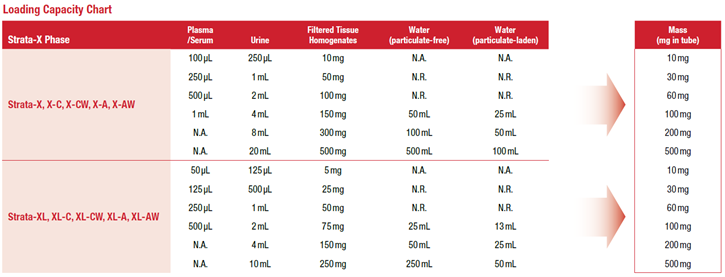
Sample volume directly influences sorbent bed mass selection and solvent volumes used throughout the SPE process. Insufficient sorbent capacity can lead to analyte breakthrough, while excessive sorbent increases solvent consumption and processing time. Below is a loading capacity chart for polymer-based SPE Strata-X, providing practical guidance for matching sample volume to SPE sorbent mass.
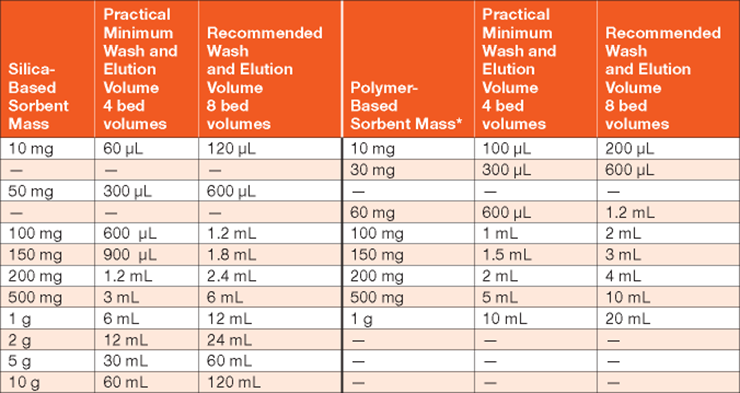
Once sorbent mass is selected, solvent volumes for conditioning, washing, and elution can be optimized to balance recovery, cleanliness, and efficiency.
5. Building a Complete SPE Workflow
After defining the key method development parameters, a complete SPE workflow can be constructed. The sorbent is conditioned with a strong organic solvent, equilibrated with a weaker solvent, and then loaded with the prepared sample under controlled flow conditions. Washing steps are optimized to remove matrix interferences while retaining analytes, followed by drying of the sorbent bed and elution with a strong solvent to recover the target compounds.
SPE method development is most effective when guided by fundamental chemical principles. By systematically evaluating sample pre-treatment, matrix compatibility, analyte properties, and sample volume, reliable and efficient SPE methods can be developed to obtain high quality data.
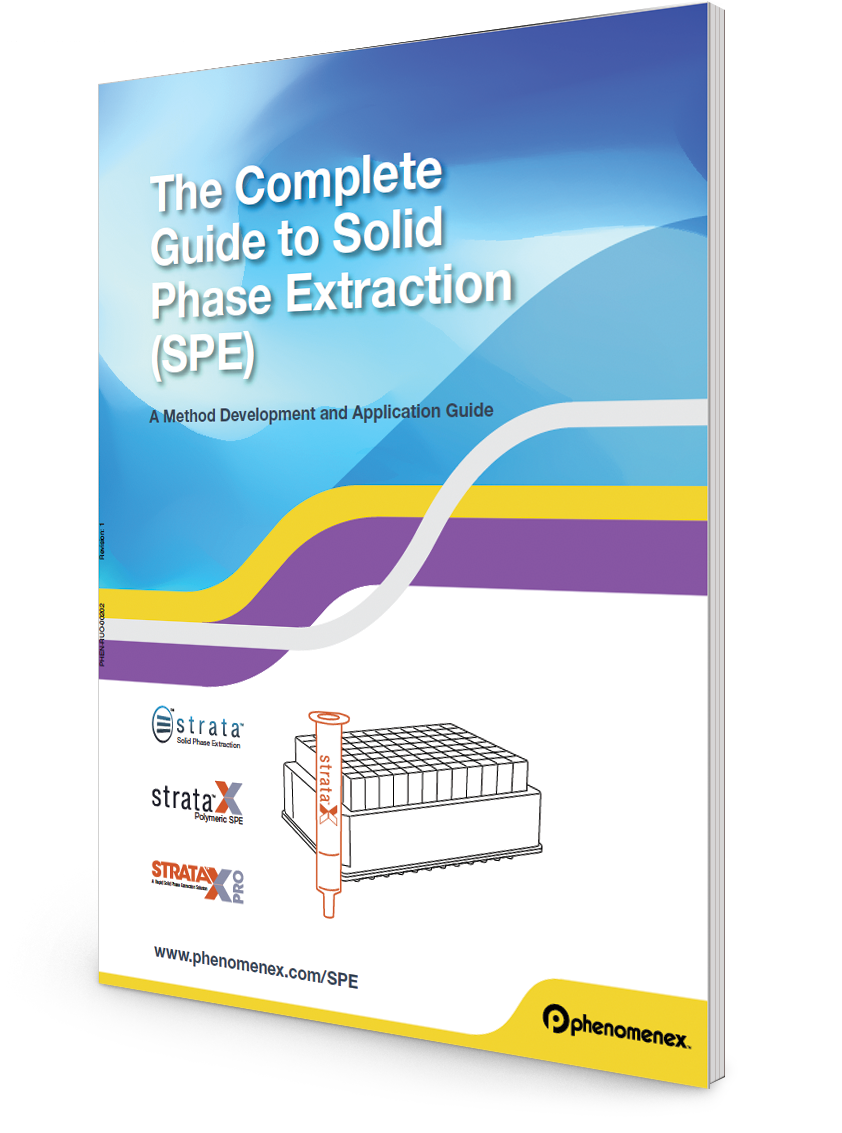
SPE The Complete Guide to Solid Phase Extraction (SPE)
This guide goes through Solid Phase Extraction; from selecting a sorbent, sample pretreatment, general starting methods, to industry applications.
Webinar: Solid Phase Extraction Method Development
Learn about SPE goals and requirements, product selection, pretreatment, and method development, and optmization in this webinar.

Phenomenex, the P icon, and the Phenomenex product and service marks mentioned herein are trademarks or registered trademarks of Phenomenex, Inc. in the United States and/or other countries. All other trademarks are the property of their respective owners. One or more authors are affiliated with Phenomenex, Inc. FOR RESEARCH USE ONLY. Not for use in clinical diagnostic procedures. © 2026 Phenomenex, Inc. All rights reserved.

Phenomenex is a technology leader committed to developing novel analytical chemistry solutions that solve the separation and purification challenges of researchers worldwide.
CONNECT WITH US


