
Sample Preparation Technical Tip
Level: Basic
Protein Precipitation Methods
What is Protein Precipitation?
Proteins in biological sample matrices have a dramatic effect on HPLC/UHPLC column lifetime and can interfere with MS detector sensitivity. Protein precipitation is a simple sample preparation technique that is used to remove proteins from the sample using an organic solvent or a salt.
Although there are several methods for precipitating proteins from plasma and tissue, very few offer reproducible and effective removal of proteins from samples without excessive sample transfer, which can result in loss of recovery of the target analyte.
The ideal protein precipitation extraction method allows for consistent protein removal with as few sample transfers as possible.
Different Methods of Protein Precipitation Extraction
When sample preparation involves protein precipitation, a single technique is usually used. Here are the different protein precipitation methods:
• Acid Precipitation: This method extracts proteins through precipitation by reducing the solution's pH to their isoelectric point (pI), causing them to lose charge and precipitate. Trichloroacetic acid (TCA) is commonly used for its high reactivity and efficiency, but it denatures proteins, making them non-functional.
• Salting Out (Salt Precipitation): High salt concentrations (e.g., ammonium sulfate, zinc sulfate) reduce water availability for protein hydration, causing precipitation and aggregation. This method is mild, allowing proteins to retain their biological function after re-solubilization.
•Organic Solvent Precipitation (Alcohol Precipitation): Solvents like ethanol, methanol, and acetone disrupt protein hydration, leading to aggregation and precipitation. Performing the process at low temperatures helps preserve protein integrity.
• Chloroform/Methanol Precipitation: A highly effective technique for isolating proteins while minimizing loss, using chloroform and methanol to separate proteins from other cellular components.
• Polyethyleneimine (PEI) Precipitation: PEI, a cationic polymer, binds negatively charged proteins, forming insoluble complexes that facilitate protein precipitation.
Check out our sample preparation resources below and tune in for another SPE tip next month!
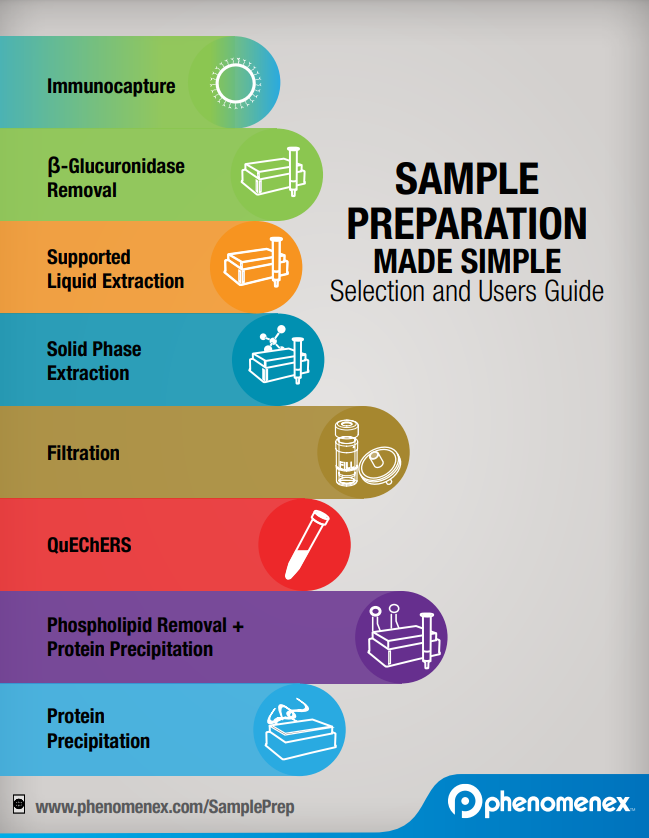
Sample Preparation Made Simple
A complete selection of sample preparation products and guide to get you started to develop your own clean up method.
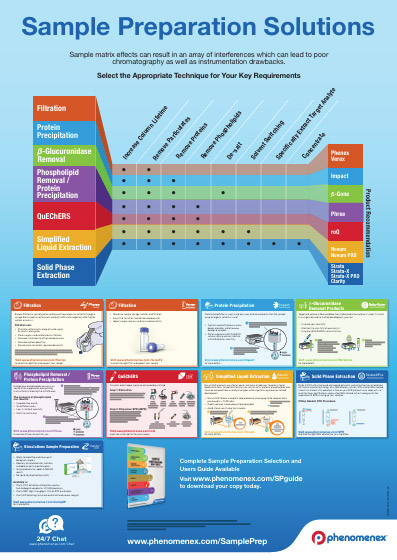
Sample Preparation Overview Poster
Overview of the various sample preparation techniques and methods used to prepare samples for further analytical analysis.

Phenomenex, the P icon, and the Phenomenex product and service marks mentioned herein are trademarks or registered trademarks of Phenomenex, Inc. in the United States and/or other countries. All other trademarks are the property of their respective owners. One or more authors are affiliated with Phenomenex, Inc. FOR RESEARCH USE ONLY. Not for use in clinical diagnostic procedures. © 2026 Phenomenex, Inc. All rights reserved.

Phenomenex is a technology leader committed to developing novel analytical chemistry solutions that solve the separation and purification challenges of researchers worldwide.
CONNECT WITH US


