
GC Technical Tip
Level: Advanced
Water in GC: Safe or Risky? Here’s What You Need to Know
This question comes up often and dates to the early days of GC, when phases were simply coated onto columns—mostly packed columns and the first capillary columns. Injecting water back then dissolved the phase and caused it to elute from the column. Over time, capillary columns evolved. Instead of being coated, they became chemically bonded, making them stable to water injections, and even solvent rinsing.
Today, every Phenomenex GC column is chemically bonded, meaning water will not strip the phase from the column. Bonded columns are stable to water injections and can even be rinsed with water.
However, very polar phases like polyethylene glycol (PEG) can accumulate water over time, causing slight changes in the phase. While this won’t remove the phase, it’s best to limit water injections on most PEG-based columns. One exception is ZB-WAXPLUS a specially processed PEG phase designed to withstand multiple or continuous water injections.
Another key consideration: water’s expansion volume when vaporized is huge! For example, 1.0 µL of water expands to over 1,200 µL in a 225°C inlet at 12 psi. By contrast, 1.0 µL of isooctane expands to only 136 µL under the same conditions. If the expansion volume exceeds the liner capacity, vapor can back-flush into unheated gas lines, causing persistent carryover. Small injection volumes are recommended.
One common application using water as a matrix is volatiles analysis. While analytes may elute at lower temperatures, water and other high-boiling contaminants can remain on the column, altering separation. Routine bake-off is essential to restore performance.
Most hesitation about water injections comes from old stories about coated columns. Today, Phenomenex supplies only bonded columns, so the main considerations are injection volume, expansion volume, and water build-up at low temperatures. Keep these in mind, and water injections can be successful.
We hope you found this tip helpful—stay tuned for next month’s technical insight!

Zebron ZB-WAXPLUS GC Columns
• 100% aqueous stable, excellent for aqueous samples; bonded and solvent rinseable
• Extremely inert for acidic compounds
• Enhanced selectivity for low boiling solvents; high retention of alcohols and chlorinated solvents
• Increased efficiency at 20 °C
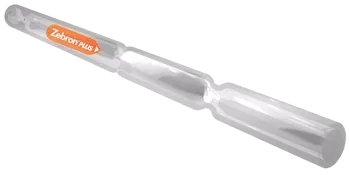
Brochure - GC Inlet Liners
Find the right traditional GC inlet liner for your work.

Phenomenex, the P icon, and the Phenomenex product and service marks mentioned herein are trademarks or registered trademarks of Phenomenex, Inc. in the United States and/or other countries. All other trademarks are the property of their respective owners. One or more authors are affiliated with Phenomenex, Inc. FOR RESEARCH USE ONLY. Not for use in clinical diagnostic procedures. © 2026 Phenomenex, Inc. All rights reserved.

Phenomenex is a technology leader committed to developing novel analytical chemistry solutions that solve the separation and purification challenges of researchers worldwide.
CONNECT WITH US


