
GC Technical Tip
Level: Advanced
It’s All In Your Head – Optimizing Sensitivity During Headspace Sampling
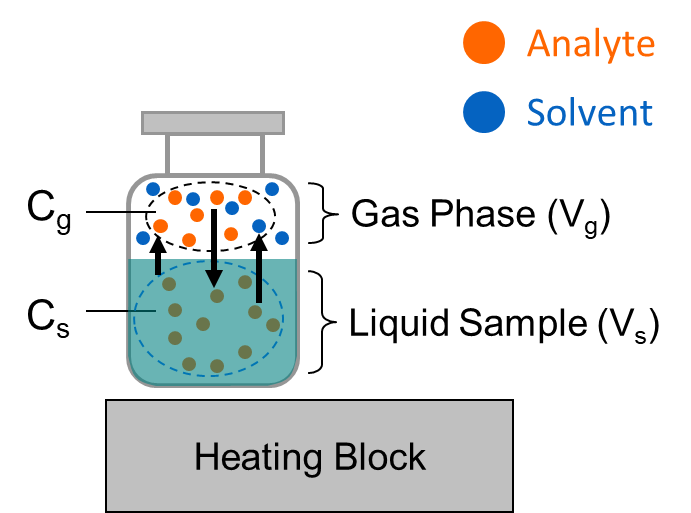
Headspace sampling during GC analysis is an effective tool with which to evaluate the volatile analytes within an otherwise non-volatile sample. There are many means by which to optimize the volatility of targeted analytes to improve sensitivity during headspace-GC methods. The primary concerns are the choice of sample diluent and the temperature settings for the headspace sampler. Beyond that, we can consider additives with which to encourage analyte volatility.
Sample Diluent and Detector Considerations
• A low-boiling diluent during a residual solvent analysis would overwhelm the headspace volume within the vial and occlude the sensitivity of the GC method towards the analytes.
• The diluent during a Residual Solvent Analysis should ideally feature a higher boiling point than the targeted analytes. Examples would be DMF, DMSO, or DMI. This will allow the sample to be warmed to a high enough temperature to volatilize the residual solvents of interest. The diluent itself will generate a small peak and will not tail into any analyte peaks. DMSO is a common diluent and is often warmed to 100 °C for 30 min prior to sample injection.
• If water must be used as a diluent during headspace analysis, limit the vial temperature to 80 – 90 °C and consider a long equilibration time at this temperature, such as 30 – 45 min.
• The transfer line and sample loop should be warm enough to ensure the volatility of the analytes as they travel towards the injection port of the GC instrument. Temperatures often range 125 – 175 °C, depending on the analytes.
Sample Additives
• Salts may be added to analytes that are dissolved in water. The water will expend effort to dissolve the salt at the expense of maintaining solubility of any organic substances, allowing them to volatilize more readily. A kosmotropic salt, such as ammonium sulfate, would be ideal to “salt out” targeted analytes, but sodium chloride is also common.
• Water may be added to samples that are dissolved in a water-miscible organic solvent, such as DMF or DMSO. As with the example above, the targeted analytes will volatilize more readily.
Beyond these considerations, be sure to use the proper size for your vial, such that the sample diluent only occupies only a quarter or half of the total volume within the vial. This will avoid contaminating the sampling needle and will provide the space for ample volatilization of the analytes.
GC Syringes
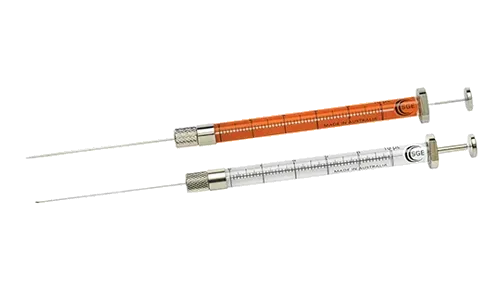
Available in multiple needle point styles for autosamplers, piercing septum, and headspace.

GC Column Finder
Select a search method below to find the right Zebron GC column. Choose manufacturer, phase chemistry, or official method to view compatible columns.

Phenomenex, the P icon, and the Phenomenex product and service marks mentioned herein are trademarks or registered trademarks of Phenomenex, Inc. in the United States and/or other countries. All other trademarks are the property of their respective owners. One or more authors are affiliated with Phenomenex, Inc. FOR RESEARCH USE ONLY. Not for use in clinical diagnostic procedures. © 2026 Phenomenex, Inc. All rights reserved.

Phenomenex is a technology leader committed to developing novel analytical chemistry solutions that solve the separation and purification challenges of researchers worldwide.
CONNECT WITH US


