
GC Technical Tip
Level: Basic
The Selective Detective: Altering Selectivity While Retaining the Polarity of a GC Column
GC columns provide a wide range of polarities to accommodate most analytes, but opportunities for optimal selectivity may be overlooked among columns within the same range of polarity. The stationary-phase of a GC column is characterized by their functional group that imparts a variety of intermolecular forces onto the analytes. The ZB-35 and ZB-1701 provide great examples with which to evaluate the effect of different functional groups in the stationary-phase towards the selectivity of a GC column.
An analyte may interact with the stationary-phase of a GC column through fleeting Van der Waals forces, induced dipole and permanent dipole interactions, pi-pi and aromatic stacking, and strong H-bond interactions. The ZB-35 and ZB-1701 stationary-phases both feature a polysiloxane backbone, but with a different composition and distribution of ligands to shake things up (pictured below).
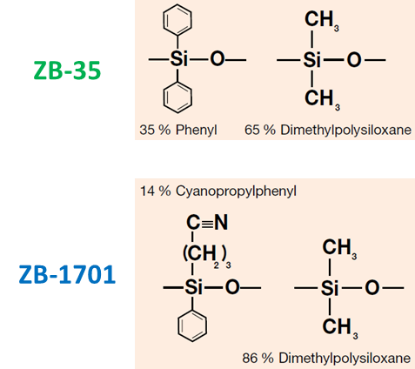
Fig 1: Composition of ZB-35 and ZB-1701 stationary phases
Phenyl ligands will interact with aromatic analytes and the unsaturated bonds of other analytes, but can also participate in dipole/induced-dipole interactions. Meanwhile, the methyl ligands are strictly hydrophobic. The cyano group at the terminus of the cyanopropyl ligand is the kicker for the ZB-1701, interacting with analytes through dipole interactions, unsaturated bond interactions, and as an H-bond receptor via the partial-negative charge on the nitrogen. The ZB-1701 may feature a higher percentage of methyl ligands (86%) than the ZB-35, but the cyanopropyl ligand increases the overall polarity of the ZB-1701 to match the ZB-35.
Now we will see how that difference in stationary-phase ligand composition and distribution will affect the selectivity of the two columns. The same sample of analytes was evaluated on a ZB-35 and ZB-1701 using both the same column dimensions and the same instrument conditions. The higher content of polydimethylsiloxane within the ZB-1701 induced slightly longer retention onto the saturated hydrocarbon analytes, but the belle of the ball is 2,4-Dimethylphenol (Peak 2). A quick glance at this analyte suggests that aromatic stacking would favor the ZB-35 to induce longer retention of the analyte. Do not overlook the acidic nature of the phenol, as the hydrogen within the hydroxyl group will have a very prominent partial-positive charge due to the electron-withdrawing nature of both the oxygen and adjoining benzene ring. The end result is that Peak 2 exhibits stronger retention along the ZB-1701 through interactions with the partial-negative charge of the cyanopropyl group and the aromaticity of the phenyl rings.
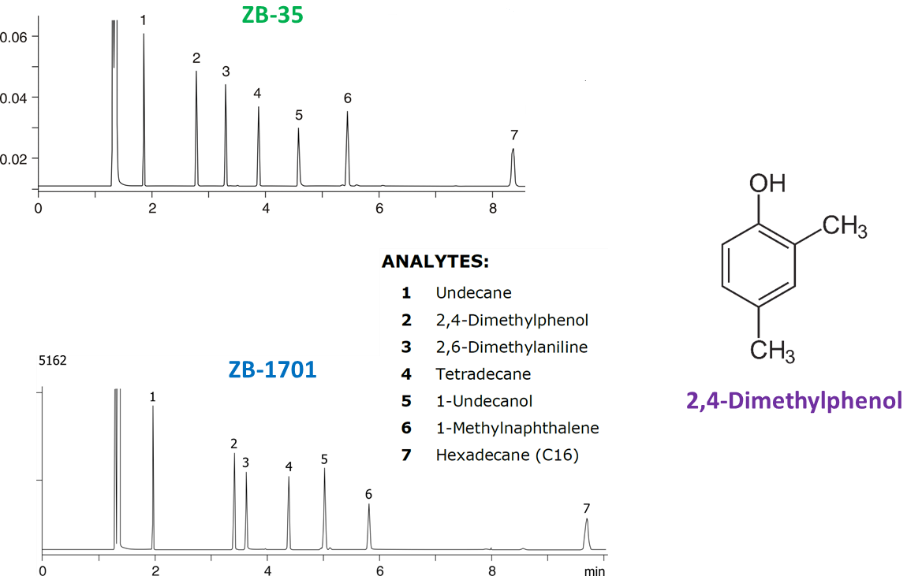
| Column: | Specified in chromatogram |
| Dimensions: | 30m x 0.32mm x 0.25µm; |
| Injection: | Split 100:1 @ 250° C, 1µL; |
| Carrier Gas: | Hydrogen @ 1.18mL/min |
| Detector: | FID @ 250° C |
| Oven: | 140° C, isothermal |
| Sample: | Test Mix |
Selectivity is a powerful tool with which to improve resolution, particularly when satisfied with the overall retention capacity of a method. No need to throw the baby out with the bath water. Rather, a lateral move to alternative selectivity when preserving the overall polarity can expand one’s options during GC method development.
We hope you found this tip useful. Stay tuned for next month's tech tips!

Zebron ZB-1701 GC Columns
Alternate Selectivity for Mid-Polarity Analyses
• Fast run and re equilibration times for enhanced sample throughput and productivity
• Provides alternate selectivity to phenyl phases with similar polarity
• Good peak shape for active analytes
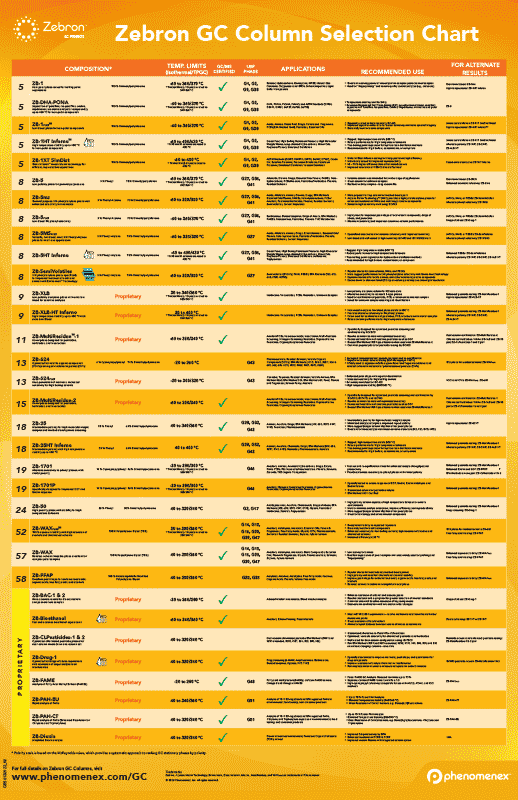
Zebron GC Column Selection Chart
Our GC Column Selection Guide will help you choose the correct GC Zebron phase based on Polarity, applications and other criteria.

Phenomenex, the P icon, and the Phenomenex product and service marks mentioned herein are trademarks or registered trademarks of Phenomenex, Inc. in the United States and/or other countries. All other trademarks are the property of their respective owners. One or more authors are affiliated with Phenomenex, Inc. FOR RESEARCH USE ONLY. Not for use in clinical diagnostic procedures. © 2026 Phenomenex, Inc. All rights reserved.

Phenomenex is a technology leader committed to developing novel analytical chemistry solutions that solve the separation and purification challenges of researchers worldwide.
CONNECT WITH US


