
GC Technical Tip
Level: Intermediate
Peak Shape Problems
Negative Peaks - Some or All Peaks Dip Below the Baseline
Negative peaks, where some or all peaks dip below the baseline, can occur in Gas Chromatography (GC) analysis and might impact the accuracy and reliability of your results. In this month's technical tip, we will explore the possible causes and suggest remedies to troubleshoot the presence of negative peaks.
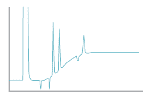
Symptom - Some Peaks Dip Below the Baseline
| Possible Cause | Suggested Remedy |
|---|---|
| Detector overload in element specific detectors such as ECD, NPD, FPD, etc. can produce both positive and negative peaks. | Have the compounds of interest arrive at the detector at a different time from the solvent or other compounds in high concentration. H2 produces negative peaks with a TCD and helium carrier gas. |
| Dirty ECD detector can give a negative peak after a positive one. | Clean or replace the ECD detector. |
| Sample contaminants (hydrocarbons or other non-responders) are present when using ECD, PID, or NPD (thermoionic specific) detectors. | Improve sample preparation and cleanup methods prior to injection |
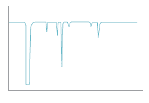
Symptom - All Peaks Dip Below the Baseline
| Possible Cause | Suggested Remedy |
|---|---|
| Incorrect polarity of the recorder connections results in nearly all peaks being negative. | Reverse polarity of recorder connections. |
| Recorder-integrator wires reversed. | Correct connections. |
| Sample injected onto the wrong column for dual-column setups. | Reinject the sample onto the correct column. |
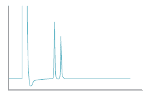
Symptom - Dip after Solvent Peak
| Possible Cause | Suggested Remedy |
|---|---|
| Detector contamination. | Clean or bake out the detector. |
| Sample contamination. | For PID detectors, check that the sample has not been contaminated with methanol or water. If necessary, prepare a fresh sample. |
| Often normal for NPD (thermoionic specific) detectors. | No correction necessary. |
Negative peaks in GC analysis can be addressed by understanding the possible causes and implementing the appropriate remedies. Most of the causes that has been observed are related to the detector that play a crucial role in negative peaks troubleshooting.
Stay tuned for more monthly technical tips on enhancing your GC analytic skills!
ZebronTM ZB-5MS PLUS
• Specialized deactivation for versatile 5 % phenyl-arylene selectivity with improved sensitivity
• Low bleed (MS Certified) and well-suited to high sensitivity GC/MS and GC/MS/MS work
Gas Management Filters and Traps
• Plug-In GC and LC-MS Gas Filters.
• Click-on GC Gas Traps.


Trademark
Zebron is a trademark of Phenomenex.

Phenomenex is a technology leader committed to developing novel analytical chemistry solutions that solve the separation and purification challenges of researchers worldwide.
CONNECT WITH US


