
GC Technical Tip
Level: Basic
Sample Injection Techniques: Enhancing Efficiency in Chromatographic Analysis
The accuracy and reliability of GC results depend heavily on the injection techniques employed. From selecting the right method to optimizing parameters, mastering GC injection techniques is crucial for enhancing efficiency and obtaining consistent, high-quality data.
The choice of injection technique depends on factors such as analytes concentration, volatility, and thermal stability. Each technique must balance requirements such as minimal column overload, narrow injection bandwidth, and reproducible sample introduction. No single technique meets all these demands, making the selection of the appropriate injection method critical for achieving accurate and reliable GC analysis results.
Types of GC Injection Techniques
GC injection techniques are categorized into several types, each with distinct advantages, limitations, and applications. Understanding these techniques is crucial to select the optimal method for specific sample types and analysis requirements.
Direct Injection
Direct injection involves inserting the sample directly into the GC inlet using a syringe, eliminating splitting or splitting loss. This method is simple and efficient and is ideal for low-concentration samples, volatile compounds, and simple sample matrices, but can lead to sample degradation due to heat and catalytic effects, and contamination of the inlet and column.
Split Injection
Split injection introduces only a portion of the sample into the GC column, mainly to avoid overloaded peaks. This technique offers several benefits, including maintaining the separation efficiency of the GC column, efficient transfer of lower volatility compounds, reduced compound degradation and adsorption, minimized loss of late-eluting compounds, limiting the introduction of less non-volatile "dirt" to the GC column, and higher GC oven start temperatures for increased throughput.
Split injection is ideal for concentrated samples, volatile compounds, and samples with low boiling points. The temperature of the injector in GC typically ranges from 200° C to 300° C, depending on the specific analysis requirements and sample characteristics.
Splitless Injection
Splitless injection involves introducing the entire sample into the GC column without splitting loss, particularly useful when combined with a split vent, which vents excess sample to prevent column overload. This technique is typically used for trace-level analyses and thermally stable compounds. Splitless injections employ two key techniques:
• Cold Trapping: Also known as cryo-focusing, this technique rapidly cools the column head, causing the analytes to condense and focus at the column entrance, enhancing chromatographic resolution and sensitivity.
• Solvent Focusing: This technique utilizes the solvent's properties to concentrate analytes at the column head. As the solvent evaporates, the analytes are focused into a narrow band, improving peak shape and resolution.
However, splitless injections can be prone to compound degradation and adsorption due to slower sample transfer, as well as peak tailing and reduced response due to non-volatile material accumulation.
Cool On-Column Injection
Cool on-column injection involves injecting the sample directly into the GC column, which is cooled to prevent sample degradation. This method is ideal for thermally sensitive compounds and high-boiling-point samples.
Programmed Temperature Vaporizer (PTV)
PTV involves heating the sample in a controlled manner to optimize vaporization, often employing solvent venting to prevent column contamination. PTV is suitable for thermally labile compounds, high-boiling-point compounds, and complex sample matrices. They operate in several modes:
• Cold Split Injection: This involves rapid heating of the PTV injector after split injection, ensuring efficient vaporization and transfer of the sample to the GC column.
• Cold Splitless Injection: This is like cold split injection, but in splitless mode, where the entire sample is introduced into the GC column. Rapid heating facilitates vaporization and transfer.
• Solvent Venting: Also known as solvent elimination or solvent removal, this mode allows for the removal of excess solvent before injection, reducing solvent peak interference and improving chromatography.
Challenges and Troubleshooting in GC Injection
GC injection techniques can be prone to various challenges, compromising the accuracy and reliability of analytical results.
Sample Discrimination
Sample discrimination occurs when components are lost due to differential volatility or thermal stability. This can happen with split/splitless injectors and can be mitigated by optimizing injection temperature, ensuring thermal stability while minimizing volatility, or using other injection techniques such as on-column injection or PTV.
Column Overload
Column overload compromises column efficiency, leading to reduced resolution and accuracy. Adjusting injection volume and sample concentration and optimizing split ratio or splitless mode parameters can prevent overload.
Injection Bandwidth
Broad injection peaks degrade chromatographic resolution. Using columns with suitable dimensions and optimizing injection conditions including choosing the right solvent can maintain resolution.
Sample Degradation and Contamination
Heat and catalytic effects cause sample breakdown, while non-volatile residues can accumulate in the inlet and column. Regular maintenance, cleaning, and using inert materials can minimize degradation and contamination.
Regular maintenance, cleaning, and optimization of injection parameters are essential for troubleshooting GC injection issues. Analysts should balance thermal stability and volatility, adjust injection volumes, and select suitable columns to match analysis requirements.
Conclusion
GC injection techniques are crucial for achieving accurate and reliable analytical results. Understanding the strengths and limitations of various injection methods enables analysts to select the optimal technique for specific sample types and analysis requirements.
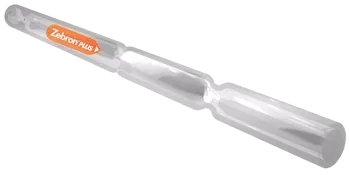
Zebron™ PLUS GC Inlet Liners
Optimized for trace and active compound analysis, Zebron PLUS GC liners undergo a unique chemical deactivation treatment resulting in a remarkably inert GC inlet liner.

Zebron PLUS GC Inlet Liners Brochure
Remarkably Inert GC inlet liners for superior sample protection. Easy to install, touchless packaging allows you to protect yourself from cuts or breakage while reducing any contamination that may occur during the installation process

Trademark
Zebron is a trademark of Phenomenex

Phenomenex is a technology leader committed to developing novel analytical chemistry solutions that solve the separation and purification challenges of researchers worldwide.
CONNECT WITH US


