
HPLC/UHPLC Technical Tip
Level: Advanced
The Use of Bio-Inert Hardware in the Analysis of Oligonucleotides
The clinical utility of oligonucleotides through controlling gene expression makes them of increasing interest as therapeutics. Oligonucleotides have very different chemical properties when compared to typical small molecule drugs, making them an interesting target, while also complicating their analysis when compared to many small molecule therapeutics. Oligonucleotides are inherently polar compounds, and require specific conditions to allow analysts to fully characterize them and their impurities.
In this two-part series we will look at the challenges analytical scientists face in the analysis of oligonucleotides and some of the method development levers they could pull when working on their analysis.
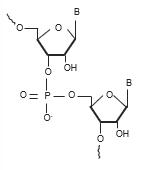
In Part 1 we began by looking at some method development strategies for the analysis of oligonucleotides. In this second part we will explore the effect HPLC column hardware has on the analysis, specifically looking at resolution, sensitivity and adduct formation.
Improving Resolution
It is well documented that large biomolecules such as proteins may adhere to stainless steel, such that there is a requirement for column priming when stainless steel hardwere is used when separating proteins. To reduce the degree of column priming needed, non-adsorbing, inert column hardware, such as the BioTi™ seen in our Biozen™ line, can be used. When analyzing oligonucleotides, a similar effect can be seen due to their phosphorylated backbones, which makes them susceptible to adsorption onto stainless steel hardware. When BioTi hardware is used, significant improvements in chromatography are seen for oligonucleotide analysis.
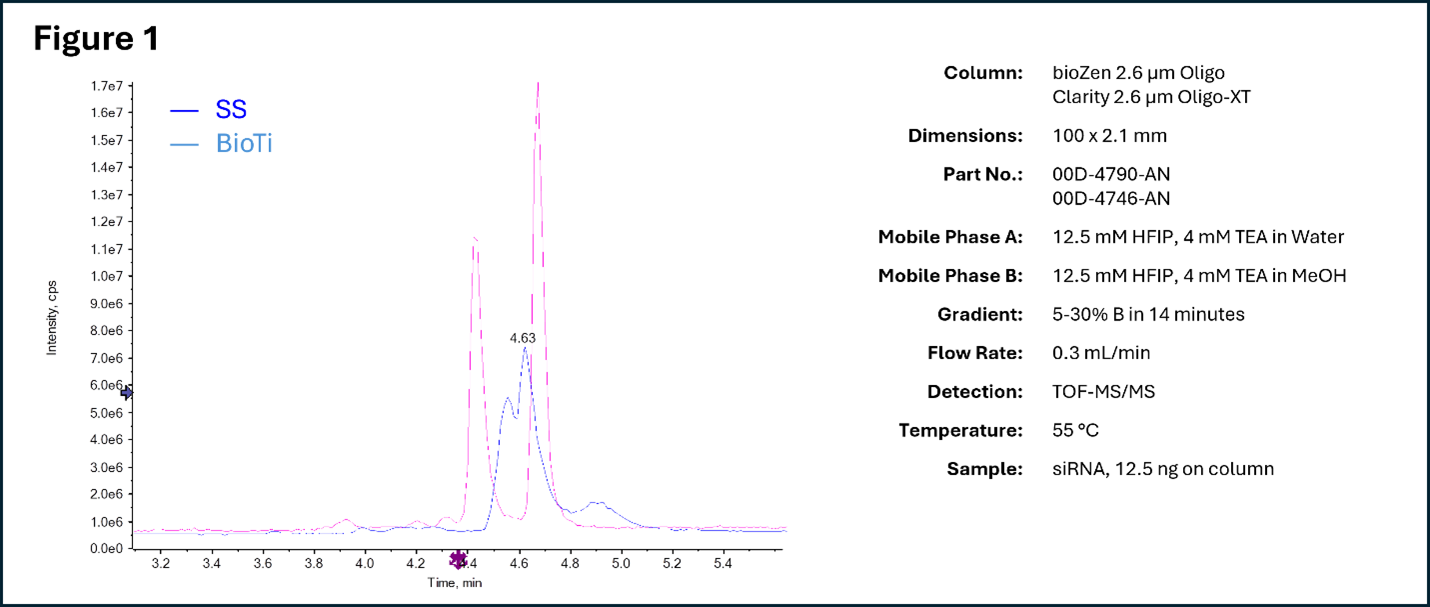
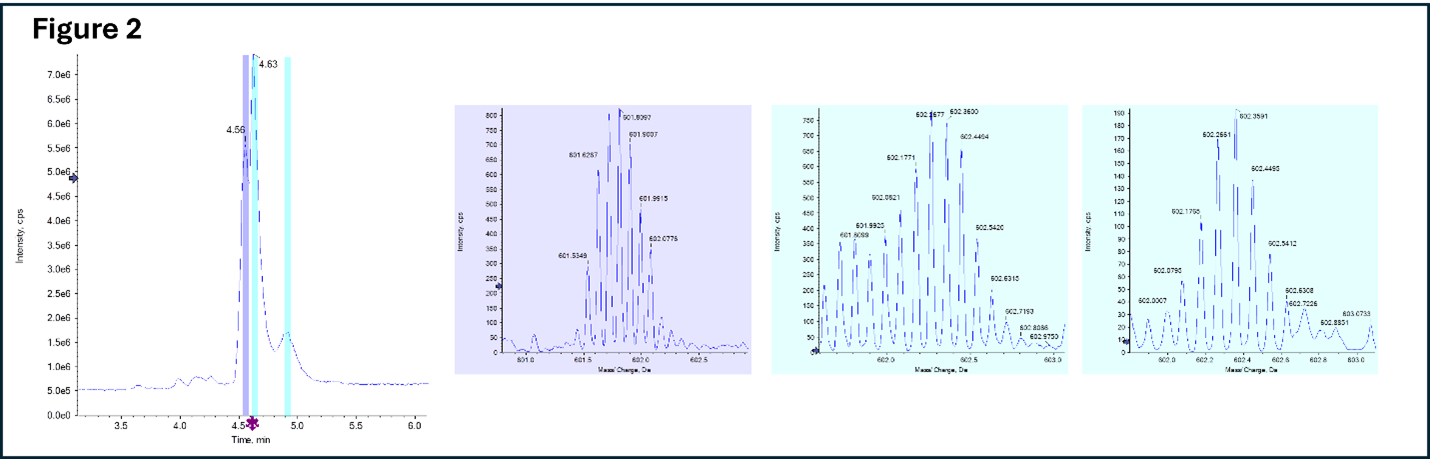
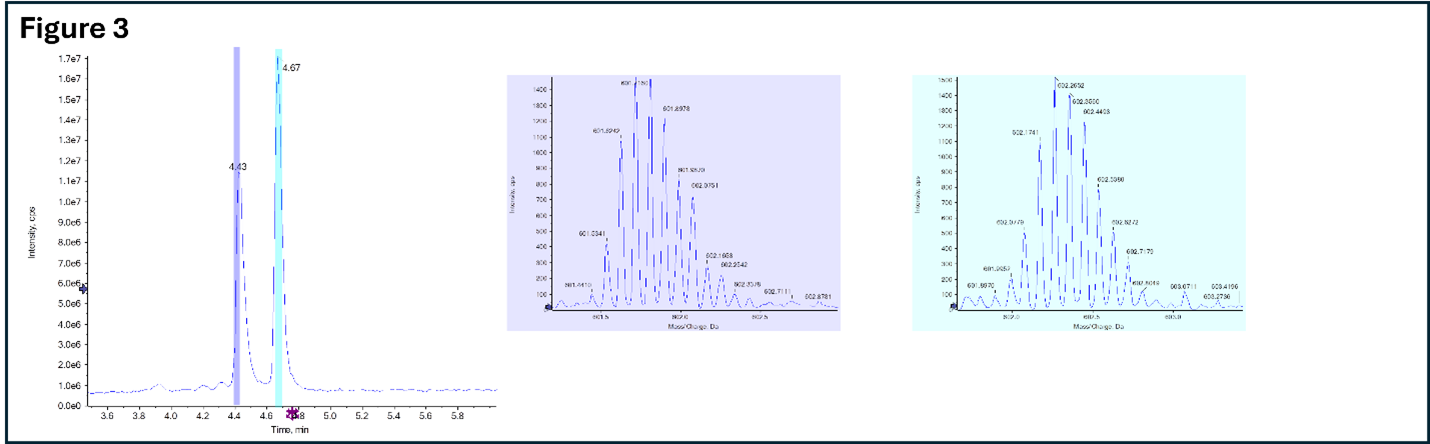
In Figure 1 we compared the results for the analisis of a double stranded siRNA using two different columns that have been packed with media from the same batch of core-shell, organosilica (hybrid) packing material,. One was packed into stainless steel hardware and the other into BioTi. The first clear observation is poor peak shape, including a later eluting shoulder for the anti-sense strand. There is also a clear loss of resolution between the two strands to stainless steel hardware. This is further supported by the spectra seen in Figure 2 which shows the bimodality of the antisense strand. Conversely, with BioTi hardware we are able to achieve good resolution and sharp peaks. The spectra shown in Figure 3 further demonstrates that BioTi hardware provided a clear separation between the sense and antisense strands.
Increasing Sensitivity
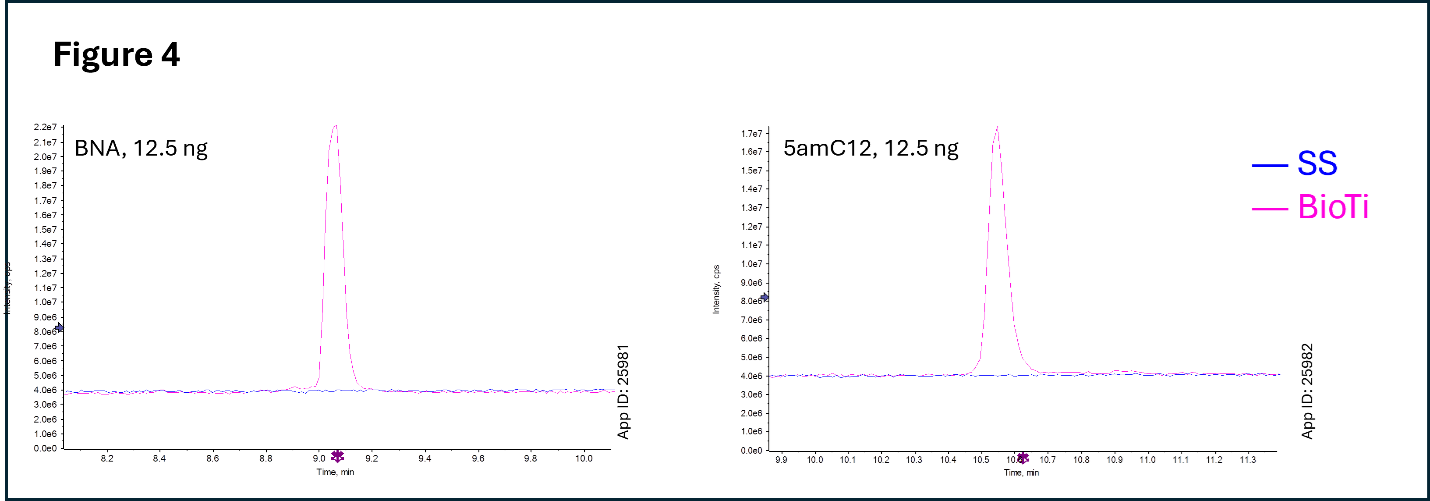
When considering hardware, sample losses due to adsorption can hinder analytical sensitivity. This is particularly important if you are working with low levels of samples, such as for a biodistribution study. In Figure 4 we compare the differences in response level (signal) between the two columns. In this case, new columns were loaded with 12.5 mg of two different oligonucleotides, BNA and 5amC12, and run under the same analytical conditions. The BioTi column generated a formidable signal for both oligonucleotide types. However, with stainless steel hardware, we observe complete adsorption.
Reducing Adduct Formation
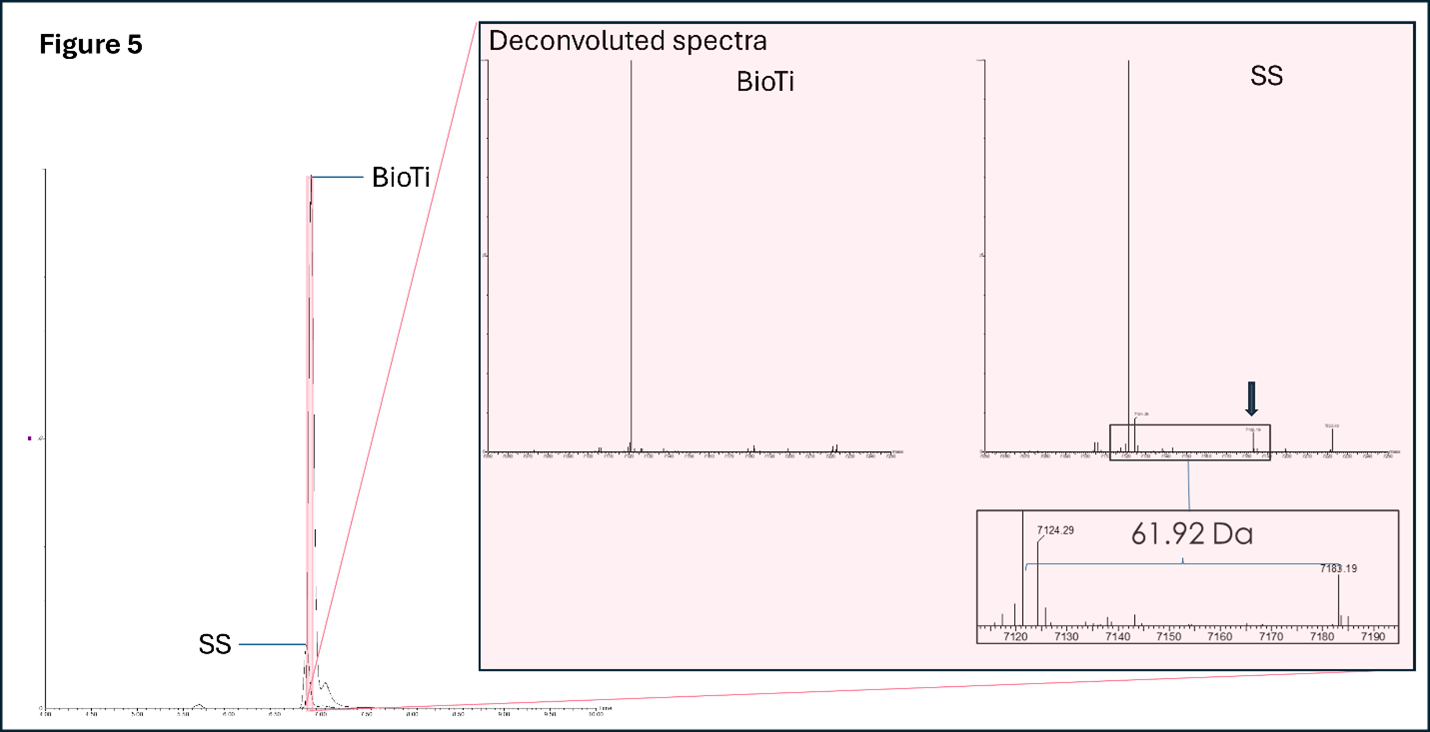
Another known problem in LC-MS analysis of oligonucleotides is adduct formation. It is generally recommended to carry out system passivation by flushing the system and column with 0.1% formic acid. This is due to the fact that analytical LC-MS approaches for oligonucleotides use mobile phases containing additives that generate basic conditions, and residual metals from the mobile-phases, stationary phase and hardware can accumulate over time. The accumulation of metals can reduce sensitivity, and ultimately the quality of the spectral data. In Figure 5 we compare the spectra of nusinersen, analyzed on both a column featuring stainless steel hardware and a separate column featuring BioTi hardware. When we look at the deconvoluted spectra, we see a 62 daltons adduct that is only observed in stainless steel.
In summary, when analyzing oligonucleotides, bio-inert hardware such as BioTi can significantly improve separation, sensitivity, and spectral data quality.
Biopharmaceutical Chromatography Solutions
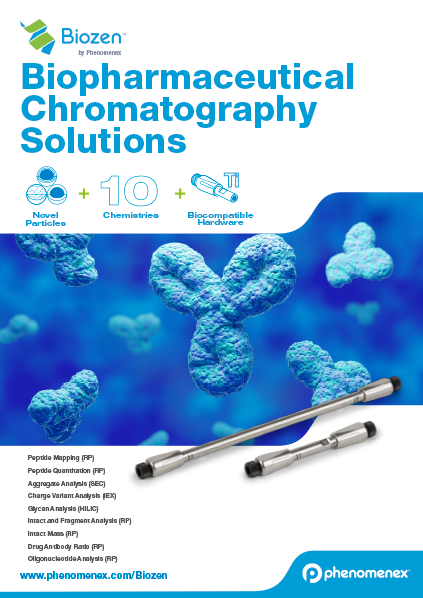
This brochure outlines Biozen chemistries along with supporting sample prep and vial solutions. Spanning four innovative particle morphologies, we've developed solutions to address common challenges associated with modern biopharmaceutical workflows and applications.
Biocompatible Hardware Brochure
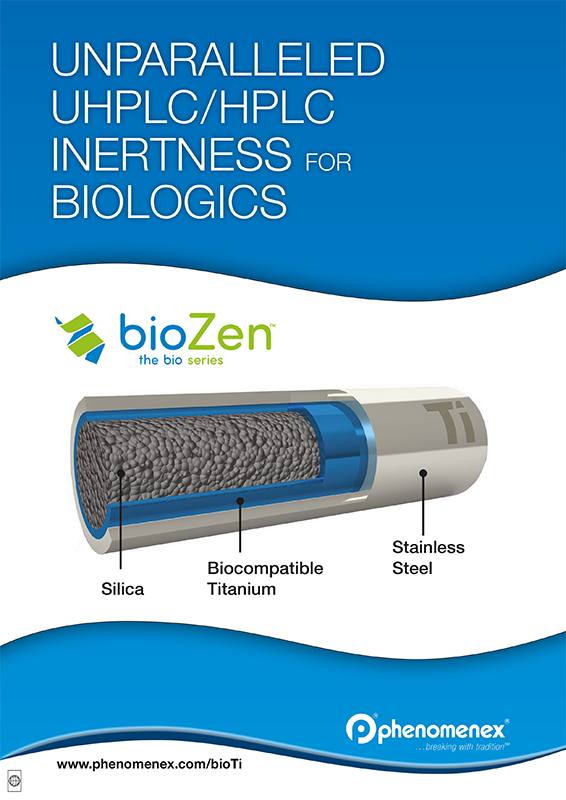
Minimize the need for priming with BioTi HPLC/UHPLC hardware, designed to curtail unwanted secondary interactions, problematic carryover, and recovery issues between injection to detection.

Trademarks
Biozen and BioTi are trademarks of Phenomenex

Phenomenex is a technology leader committed to developing novel analytical chemistry solutions that solve the separation and purification challenges of researchers worldwide.
CONNECT WITH US


